
Laparoscopic surgery referrals
We are very pleased to be able to offer keyhole surgery.
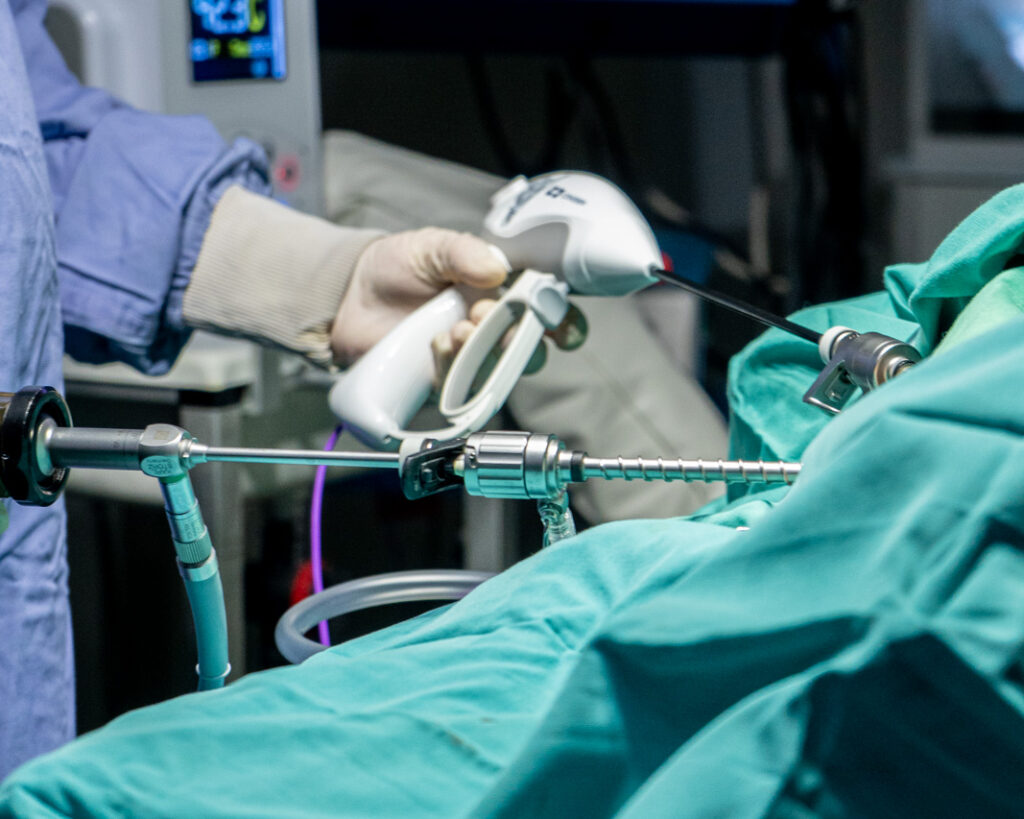
Keyhole (laparoscopic) surgery is a minimally invasive surgery which involves passing a camera and specialised instruments through small (0.5-1cm) incisions to perform abdominal surgeries.
What are the reported advantages of keyhole surgery in pets?
- May reduce post-operative pain and discomfort
- Faster recovery time, patients generally need a shorter period of rest and often return to normal exercise levels within five days
- Smaller surgical incisions
- Clear intra-operative image and magnification improve visualisation for the surgeon
- Fewer post-operative complications, such as wound healing complications
There are many surgical and diagnostic procedures we can perform using our equipment and trained colleagues.
The most common is keyhole spay (laparoscopic ovariectomy).
How does a keyhole spay work?
A keyhole spay is performed through two small incisions (0.0.5-1cm depending on the size of the patient), compared to one larger incision (2-4cm in cats, 5-15cm in dogs) in a traditional spay.
Keyhole spays are suitable for most cats and dogs, and there is no minimum weight limit.
Through one incision, a camera is inserted into the abdomen, which displays a magnified view on a monitor, allowing a clear picture of the abdomen and organs for the veterinary surgeon.
The second incision is used to insert instruments, which are used to remove the ovaries.
What is the difference between ovariectomy and ovariohysterectomy long-term?
In an ovariectomy, which is performed during a keyhole spay, just the ovaries are removed. In an ovariohysterectomy, the ovaries are removed along with the uterus up to the cervix. The effect of both surgeries is almost identical. Spayed females should not have seasons, become pregnant or develop false pregnancies, pyometra (a life-threatening infection of the uterus) or ovarian tumours.
In addition, spaying a female dog before her third season may reduce the risk of developing mammary cancers later in life.
Other keyhole procedures
Keyhole surgery can benefit many other patients, and enables us to provide minimally invasive options for surgeries such as:
- Removing retained testicles
- Liver biopsies
- Prophylactic gastropexy
Keyhole surgery requires expert training for our team, and investment in and maintenance of the equipment.
There is, therefore, an additional cost associated with keyhole surgery compared to traditional operations.
Get in touch
If you are a referring veterinary surgeon, please use the online form below to request a referral.
Please note that this form is for veterinary professionals only. If you are a pet owner, please speak to your usual vet to discuss a referral or contact us on 01273 692257.
Frequently asked questions
- Will the pet be sore after the procedure?
- How much hair is clipped?
- Will a buster collar be required?
- How long is the rest period?
- Will pain relief be required at home?
- Is it safe to leave the uterus behind?
Will the pet be sore after the procedure?
As with any surgery, it is not a pain free procedure. However, In a conventional spay, the ligaments connecting the ovaries to the abdomen stretched, which causes discomfort.
With keyhole spaying, these ligaments don’t need to be stretched, which may help minimise pain post-surgery.
How much hair is clipped?
To maintain sterility and due to the positioning of the instruments, is it necessary to clip a large area of hair on the sides of the abdomen and the stomach.
Will a buster collar be required?
Both small incisions are closed with dissolvable stitches under the skin, so most pets do not pay attention to the wounds. It is important to ensure they don’t lick, so occasionally a pet will require a body suit or collar to prevent this.
How long is the rest period?
For a conventional spay, pets need to rest for 10 to 14 days.
With keyhole procedures, the usual rest time is just five days, although we may need to adjust this depending on the individual patient.
Will pain relief be required at home?
Most pets are very comfortable after keyhole surgery. We will give you pain relief medication to take home for your pet.
Is it safe to leave the uterus behind?
So long as the ovaries are fully removed, removing the uterus does not usually add benefit to the patient in a routine spay.
In order to develop pyometra, ovarian tissue needs to be present and therefore a successful spay procedure prevents this from happening.
If we see that the uterus looks abnormal during the procedure, we may be able to remove it laparoscopically or may advise converting to traditional surgery to do so.